
Guide to Choosing Synthetic Turf: The Right Specifications for Every Sport
Education, Sports
February 24, 2026
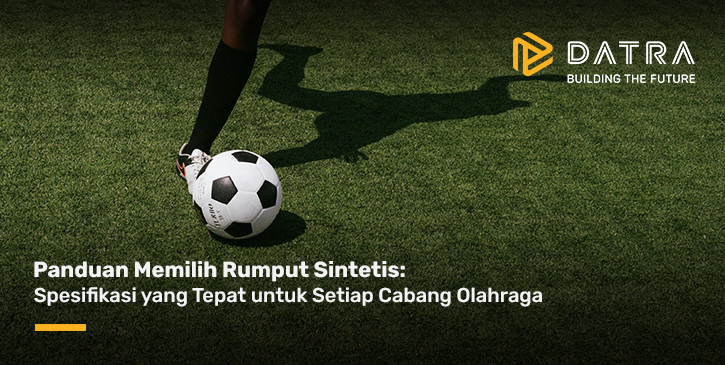
Choosing the right synthetic turf is more than just about appearance. Your turf selection affects athlete movement, surface safety, and the quality of play every day. Modern turf technology offers a variety of grass types designed for different sports needs, from ball roll characteristics and shock absorption to durability under heavy use and varying weather conditions. By understanding the appropriate specifications, a sports facility can perform at its best while providing a consistent and safe playing experience.
Football Field
The pile height of synthetic turf for football is generally 40–60 mm. Unlike natural stadium grass, which is cut to about 25–28 mm, synthetic turf is made taller because it uses silica sand and rubber (SBR) infill as cushioning, stability support, and comfort. On FIFA-certified fields, shockpads are also commonly used to enhance safety and reduce injury risk.
The most commonly used fiber type for football is monofilament. Monofilament fibers are designed to resemble natural grass blades, providing a more natural surface, consistent ball response, and excellent durability to withstand the high intensity of football play.
Rugby Field
Synthetic turf for rugby typically has a pile height of 50–60 mm, similar to football, as both sports require thick cushioning. A combination of silica sand and SBR infill forms the main components to create a softer, more stable surface. The use of a shockpad is also highly recommended to meet higher safety standards.
Rugby generally uses straight monofilament fibers, similar to football specifications.
Tennis Court
Synthetic turf for tennis courts usually has a pile height of 10–20 mm; the shorter the pile, the faster the ball travels. Silica sand infill is used to enhance traction and reduce the risk of slipping. Its role is not to absorb large sliding movements but to maintain surface stability, control ball speed (fast/medium/slow), ensure consistent bounce, and help the fibers remain upright.
Tennis courts commonly use fibrillated turf—thin, flat fibers split to create a soft texture and more natural appearance. This structure is durable and effectively holds infill in place, making it ideal for sports that require a fast, stable, and responsive playing surface.
Padel Court
Padel courts use synthetic turf with a pile height of 10–15 mm, a range designed to prevent excessive ball bounce and improve game control. The surface is filled with silica sand to provide stable grip and allow players to slide safely and in a controlled manner.
Padel courts generally use texturized turf—short, curled monofilament fibers. This structure provides excellent traction, high stability, and consistent game response, making it ideal for quick movements and explosive changes of direction.
Golf Course
Golf courses ideally use fibers of 10–15 mm. Putting greens require the ball to roll fast and consistently, so the turf is made very dense to prevent the ball from sinking and to maintain a smooth surface. Golf uses little to no infill, or just a small amount of specialized sand.
Texturized turf is generally used. Its structure creates a dense, smooth surface, making it ideal for sports that require consistency, comfort, and precise control during play.
Hockey Field
Synthetic turf for hockey typically has a pile height of 8–13 mm. This short, dense turf minimizes ball bounce and provides precise control. It does not require technical infill and can be used with a water-based system.
The surface uses short, dense texturized turf, creating a firm texture that supports fast and accurate ball movement.
Each sport requires different synthetic turf characteristics, from pile height and fiber structure to infill use. By choosing the right specifications, your facility can offer a safer, more stable, and consistently high-quality playing experience every day.
Explore our synthetic turf collection to find the best options for your field. For a more detailed discussion, contact us for a consultation, and we’ll help you select the most suitable turf solution.
Related Blogs
Guide to Choosing Synthetic Turf: The Right Specifications for Every Sport
Education, Sports
February 24, 2026


