
Futsal and Everything You Need to Know
Education, Sports
November 2, 2022
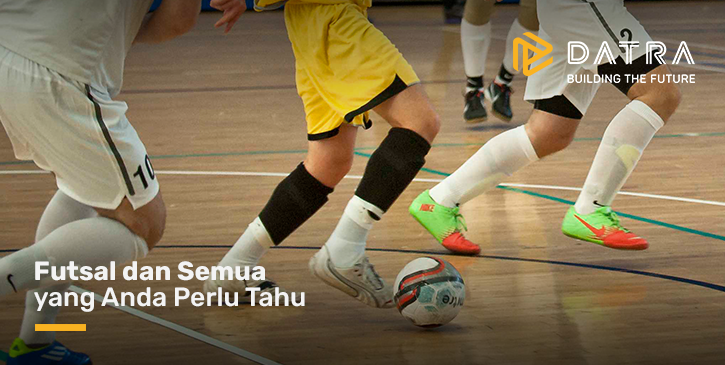
Surely you have heard about futsal, and even played this sport. Futsal is very popular with youngsters, both boys and girls. The name of this sport is taken from Spanish or Portuguese, namely futbol (soccer) and sala (indoor).
Futsal was initiated by Juan Carlos Martini from Uruguay and was inaugurated by FIFA in 1930. Although under the auspices of the same association, futsal has significant differences with football. This sport consists of 5 main players including the goalkeeper and is played for 2x20 minutes. Some of the rules in futsal also have differences, such as the rules for the ball out of the field, substitution of players, time out, to the accumulation of fouls during the match.
In order to get maximum performance when competing, FIFA also has standards on equipment and playing fields, namely the ball, goalpost and field.
.png)
Ball
The futsal ball has a spherical shape made of suitable material approved by FIFA with a circumference of 62-64 cm. Futsal balls weigh between 400-440 grams. One way to test the standardization of FIFA futsal balls is that the ball must not bounce less than 50 cm or more than 65 cm on the first bounce when dropped from a height of 2 meters. All balls used in matches played in an official competition organized under the auspices of FIFA or confederations must bear one of the following:
- FIFA Quality PRO
- FIFA Quality
- IMS – INTERNATIONAL MATCH STANDARD
.png)
Goalpost
The futsal goal has an inner dimension of 2 meters high and 3 meters wide. The goalposts must be made of wood, iron or whatever has been approved by FIFA, and have a goalpost diameter of 8 cm. Goalposts can be round or square with curved edges as long as they’re not dangerous to players. The colors of the poles and the goal net are required to be different colors from the floor of the field to make it easier for players to compete.
.png)
Field
According to FIFA regulations, the dimensions of the futsal field for regular and international matches are different:
> International matches: 38-42 meters long (touchline), 20-25 meters wide (goal line)
> Non-international matches: 25-42 meters long (touchline), 16-25 meters wide (goal line)
In addition, the lines on the field must contrast with the field color, which is often white with a width of 8 cm.
For international matches, FIFA requires the use of a flat surface, so artificial turf is not permitted. Therefore, it is recommended to use vinyl, interlock or rubber flooring.
To date, there are only 10 futsal flooring products that meet FIFA standards, including the Mondo Zeta System and Mondo Vinylsport that can be provided and installed by Datra. If you need further assistance with the design and installation, we are here to help.
Related Blogs

DATRA INTERNUSA AT ISFEX 2025: INTRODUCING DATRA SPORTS AND BUILDING INDONESIA'S SPORTS ECOSYSTEM THROUGH THE JAWARA PHILOSOPHY
Sports
November 12, 2025

Upgrade Your Sports Hall Before the Competition Season Begins: From Re-Topping and Seating to Sports Equipment
Sports
October 23, 2025

Schelde Basketball Hoops for Every Level: From World Competitions to School Courts
Education, Sports
September 26, 2025
