
Benefits of Wall Climbing for Physical, Mental and Social Toughness
Education
February 28, 2024
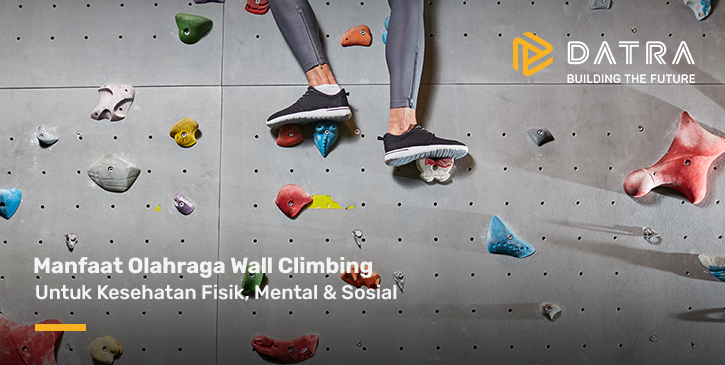
Wall climbing is a sport and recreational activity that can be done in an indoor or outdoor environment. Wall climbing has many benefits for all aspects of life, both physical, mental & social.
In the past, wall climbing was considered a sport for adrenaline junkies. However, along with technological developments, wall climbing has transformed by presenting a safer playing model. In fact, it can be done by anyone from children aged 4 years and over. Let's look at the explanation of the benefits of wall climbing for our lives.
Physical benefits
- Increases muscle endurance
- Strengthens core muscles
- Low intensity aerobic equivalent
- Strengthens the cardiovascular system
- Strengthens hands and fingers
- Sharpens the forearm and upper arm muscles
- Sharpens shoulders, neck & upper back
Wall climbing is one of the best types of activities that relies on all the muscles of the body. A skilled climber understands that most of this sport is related to dexterity, mastering technique, body balance and leg strength.
Physically, wall climbing activities can make your body muscles slimmer and stronger. So, these sports activists are known to not be susceptible to injury because their bodies are strong & stable.
The positive effect on the physique is increasing the strength of the hands, forearms, biceps, shoulders, neck, trap muscles, upper back, wings, lower back, stomach, buttocks, thighs and calves. Apart from that, it increases the strength of the cardiovascular system.
Wall climbing training is also very suitable for athletes in other sports outside of their regular training.
- Soccer athletes – Increase hand strength to grip the ball. As well as building body agility.
- Athletes in racket sports such as tennis, squash, or cricket – Increase hand strength to hold the racket. Build smash power. Build body agility.
- Sprint & cycling athletes - Build upper body & flexibility.
Mental benefits
- Decision-making
- Visualization
- Problem solving
- Goal setting
- Planning
- Concentration
- Determination
- Self-confident
- Stress reliever
- Sense of Achievement
- Spatial awareness
- Motor Skills
Our natural instinct as humans is to climb whatever we can get our hands on. That is, until we get scolded. This instinct should be encouraged, not discouraged. Wall climbing activities will benefit children in many ways.
Kids don't think about boring things like studying. They want to have fun and release energy. In a controlled environment, they will learn how to channel their energy productively.
There are many examples of weakened muscle function in children today compared to in the past. The reason is that today's lifestyle is not what it used to be. Whether it's the impact of technological developments or concerns about injuries to children. But the fact is, today's children are not as active as they should be.
Every climbing route is like a puzzle, requiring patience, planning and forcing climbers to make decisions to reach a place. Climbing requires us to make the right decisions as we go, commit and follow through. So, we must be able to assess a problem, find a solution, and then implement the plan.
Beginner climbers usually decide on their route over and over again, not looking ahead to see the bigger picture in front of them. But professional athletes, they usually visualize the route before grabbing the first hold. With practice, climbers are able to see the entire route in their mind, building their problem-solving and planning skills.
Setting goals is a natural mental development in the sport of wall climbing. If you are familiar with climbing walls, you will definitely realize that they contain several hand and foot holds to create a climbing route.
Each route has a different level of difficulty depending on the size of the rock and the complexity of the path. Once we are able to complete a route plan with a certain difficulty, we will usually automatically challenge ourselves to plan a more difficult route. Sometimes we need to climb the route several times before finally succeeding. The practice of noting these routes will help goal setting become a habit.
The sense of accomplishment that comes from reaching the top is second to none. We will find better self-development every time. By achieving something that once seemed impossible, it forces the climber to become aware of their true versus perceived abilities, thereby increasing self-confidence. If we consider what has been achieved, everything will seem to make sense.
Social benefits
- Networking and friendship
- Communication and listening skills
- Trust
- Leadership skills
- Healthy
- Building Character
Basically, wall climbing training is about how we master ourselves. However, on some occasions it can be considered a team sport. It could be that we practice with a group of friends, colleagues & family.
The various roles a person plays while climbing builds character and leadership skills. Every climber will have the opportunity to become a student and learn from others.
Apart from that, physical activity in wall climbing is also a positive intervention for children who grow up with learning difficulties such as ADD/ADHD.
The article above has explained the benefits of wall climbing for physical, mental & social toughness. Hopefully this information can motivate all of us to continue living a healthy life by exercising regularly, one of which is wall climbing.
See you in the next article.
Related Blogs

Schelde Basketball Hoops for Every Level: From World Competitions to School Courts
Education
September 26, 2025

Sports Wood Flooring: Comfort, Safety, and Performance in One System
Education
September 12, 2025

